Opening
Gigz
Finding a fundi you can trust, and work you can count on.
A marketplace where customers post jobs, compare quotes from verified workers, and can hold payment until the job is done.
At a glance
The result
Launching Q1 2027, with the MVP in development.
What I did
The mobile UI, the user flows and the frontend.
The problem
Hiring a skilled worker in Tanzania runs on referrals, WhatsApp groups and luck.
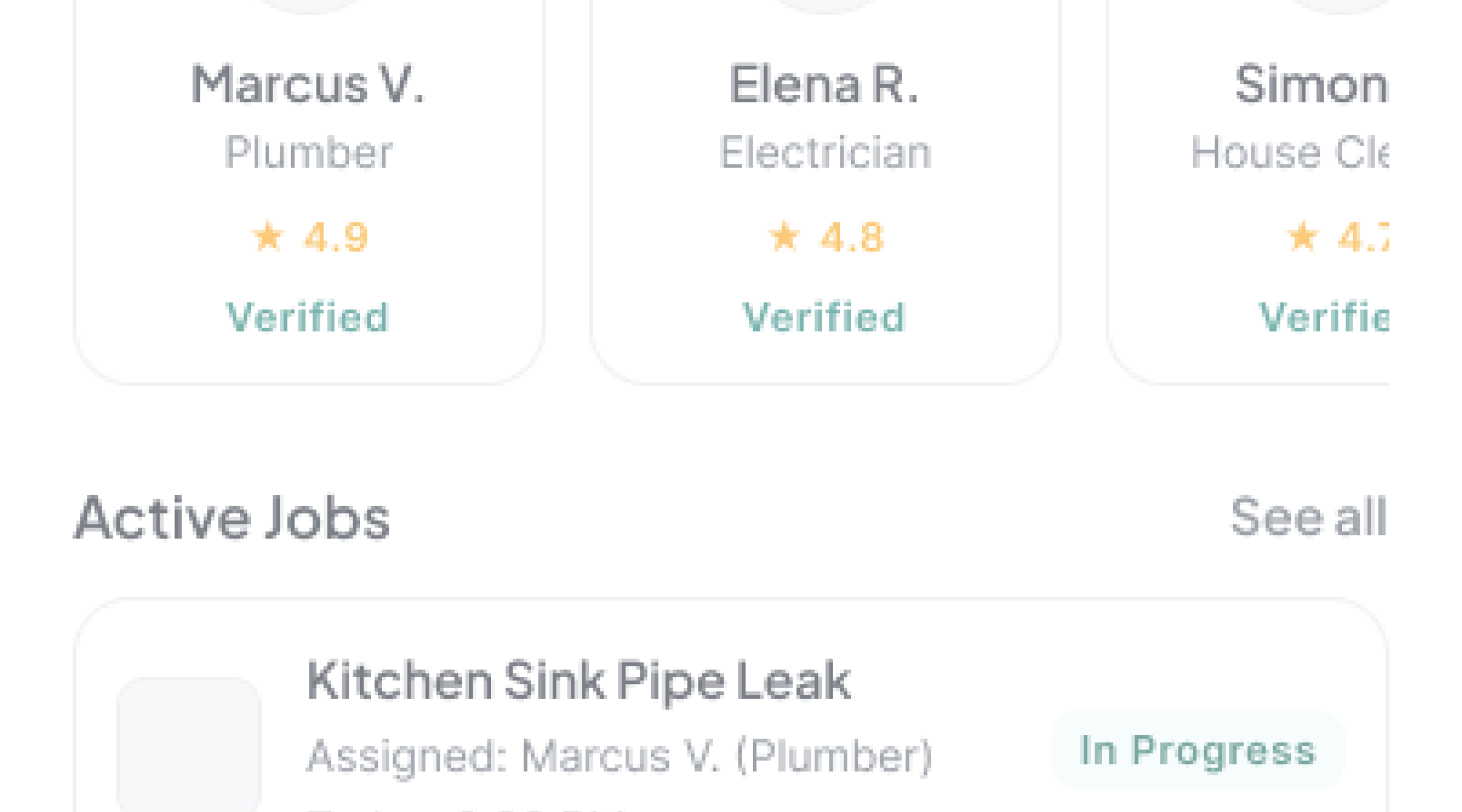
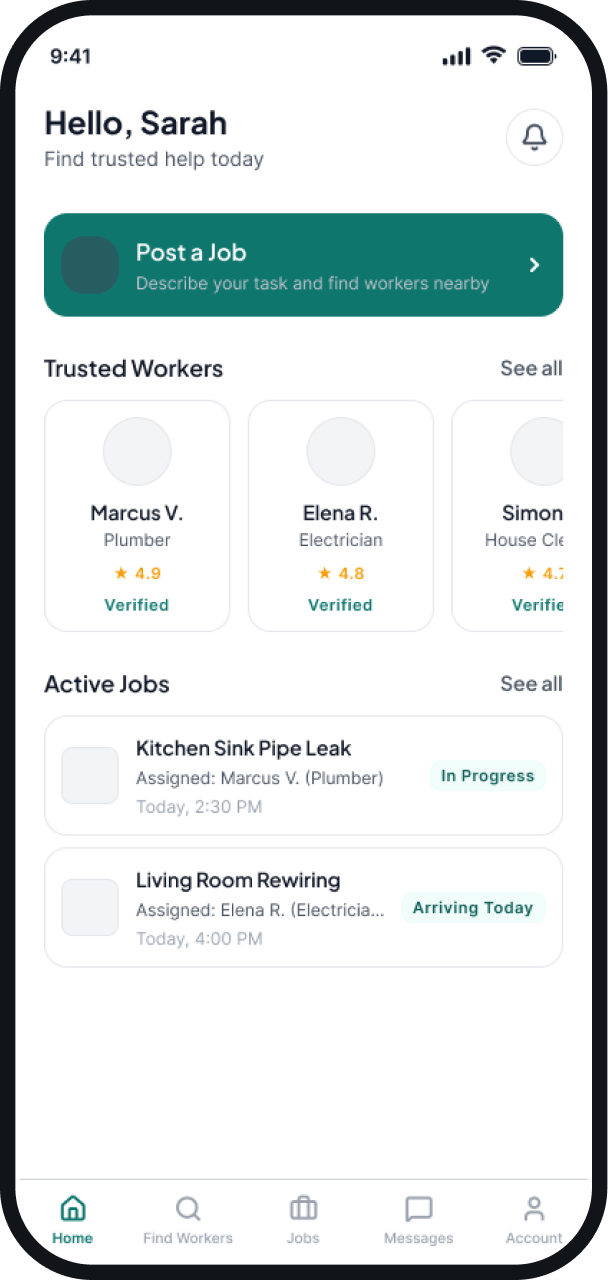
01 What’s built
In focus: the product taking shape.
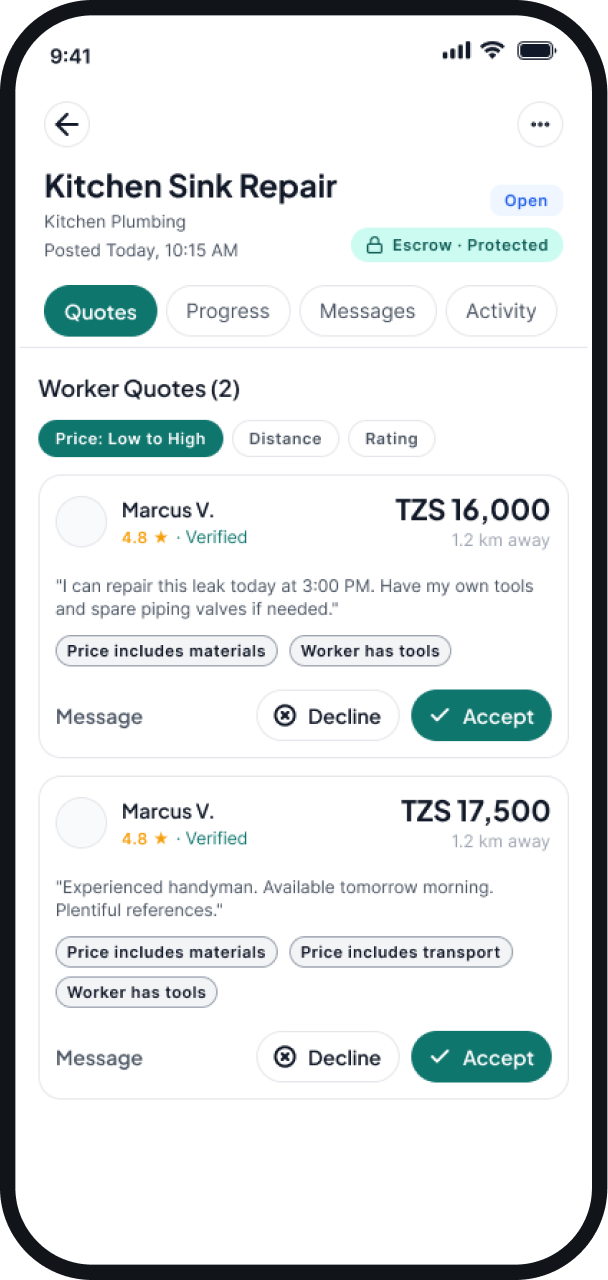
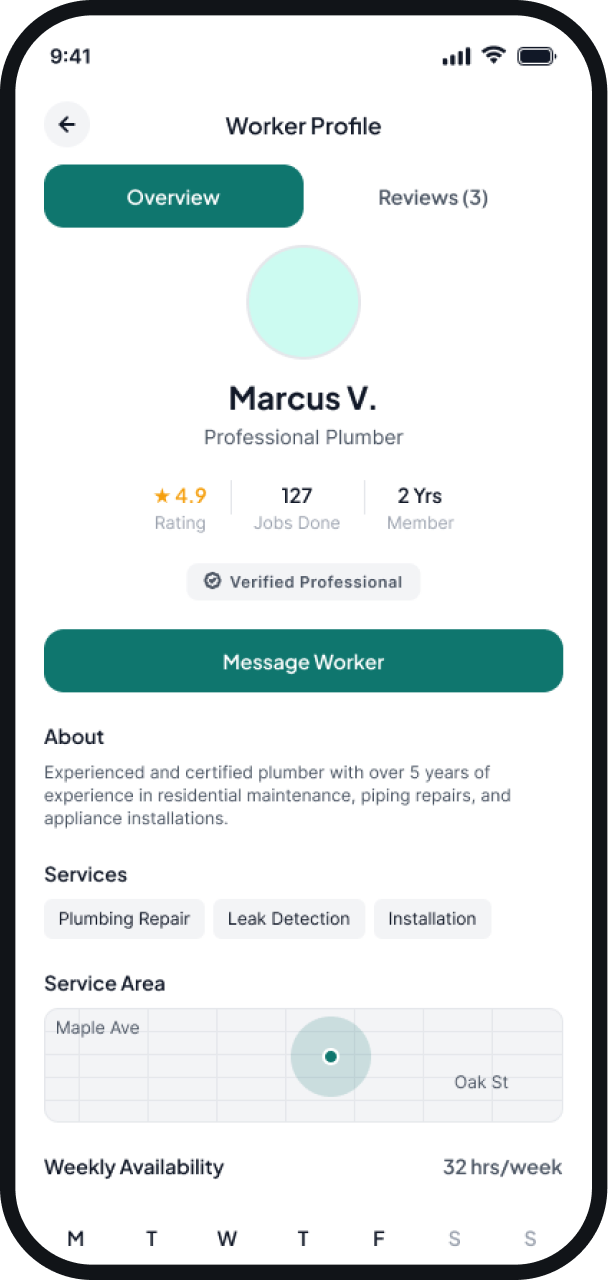
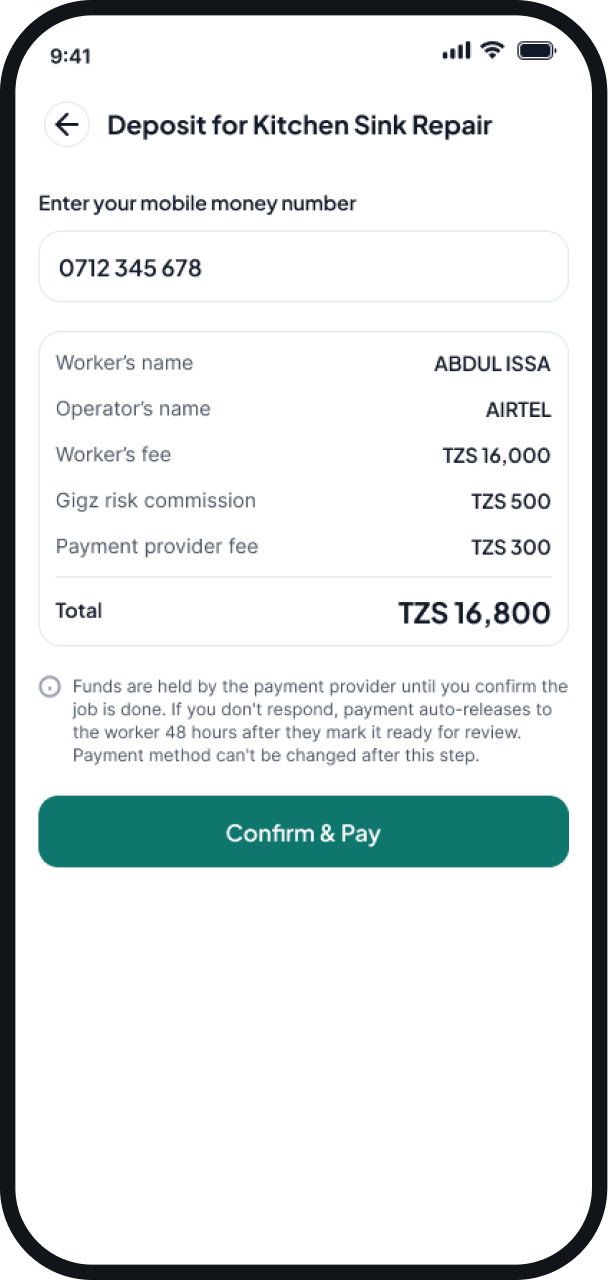
Where it’s heading
Where it’s heading
Q1, 2027
planned launch, with the MVP in development.
Verified
Workers checked against TRA, VETA and NIDA documents
English + Swahili
Built for both languages from the first release
What I’m learning: Writing the requirements first showed me how much a marketplace depends on its edge cases. No-shows, disputes and cash jobs all needed a plan before any screen did.
02 What I did
The whole mobile UI, the user flows and the frontend.
Designed the whole mobile platform’s UI and user flows, and built the frontend. A backend engineer designed the backend architecture and database schema.
Project
Personal · for customers and skilled workers in Tanzania
My role
Design engineer: UI, user flows and frontend
Timeline
2 months · launching in Q1 2027
Team
Team of 2: me and a backend engineer
Question
Why verify workers by hand?
An admin checks each worker’s TRA and VETA certificates and NIDA ID before the badge appears, so the badge means something.
Question
Why make escrow optional?
Some customers want protection, others prefer cash. A licensed provider holds payment for those who want it.
03 The story behind it
Hiring a skilled worker in Tanzania runs on referrals, WhatsApp groups and luck.
Customers struggle to find someone suitable quickly, or to know whether a worker is qualified and a price is fair.
Skilled workers struggle too: their work depends on personal networks, with no way to show their skills or build a reputation.
Hiring a fundi, the old way
01
Ask friends and family for someone they know
02
Post in a WhatsApp group and wait
03
Guess whether the worker is qualified
04
Agree a price with nothing to compare it to
05
Hope the job gets done, with no recourse if it isn’t
From the Gigz problem research
“I never trusted that fundi bomba again… I had to find a way to call another fundi, and waited the whole day at home for him.”
Bringing it into focus
The real need: trust on both sides, before any money changes hands.
What we kept seeing
Is this person any good, and is this price fair?
The question behind every hire
What it needed
Verified workers, quotes side by side, and payment held until the job is done.
Chapter 04 — Bringing it into focus
From wireframe to final screen
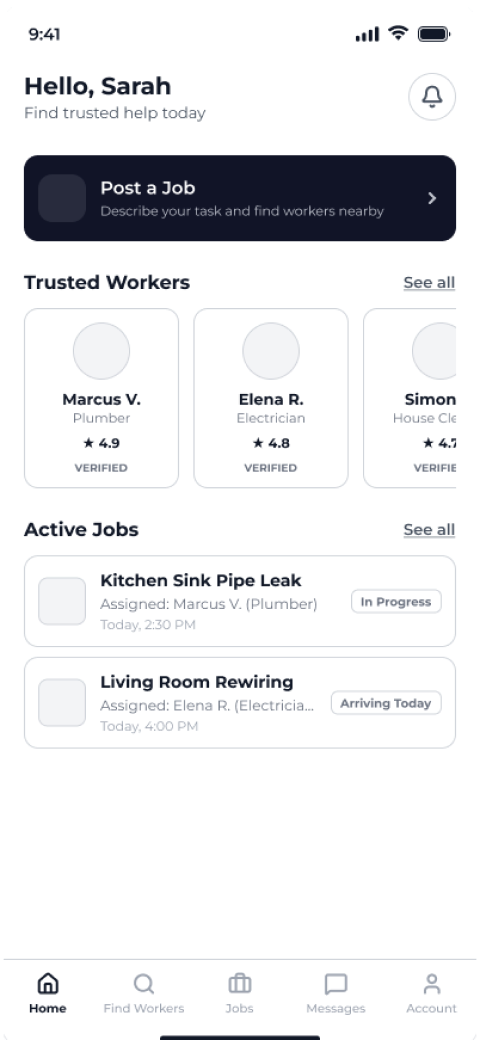
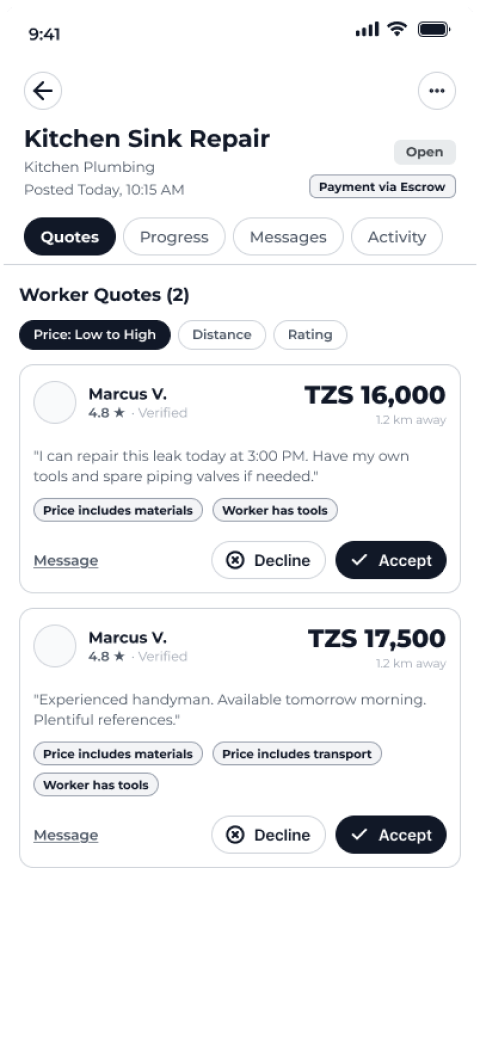
More detail · Research
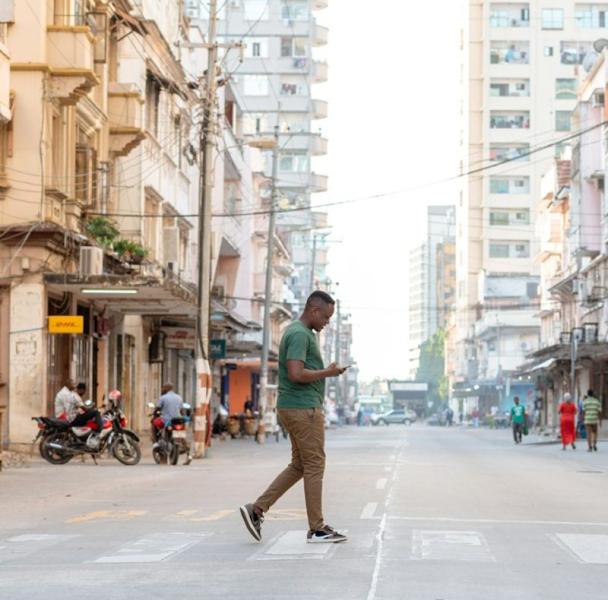
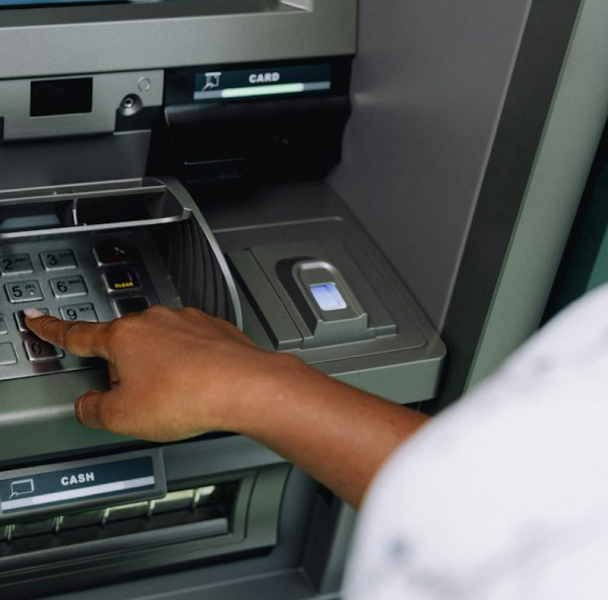
What both sides struggle with, mapped before designing anything
Before designing anything, we mapped what both sides struggle with.
What we found
- Customers can’t tell whether a worker is qualified or trustworthy.
- Prices are hard to judge, because there’s nothing to compare them with.
- Workers depend on personal networks for a steady supply of jobs.
- When a job goes wrong, neither side has anywhere to turn.
Technical notes
Stack and trade-offs, for engineers and recruiters · Figma · React Native · Storybook · NestJS · PostgreSQL · Redis
Stack
- FigmaDesign
- React NativeMobile app
- StorybookComponent testing
- NestJSBackend
- PostgreSQLDatabase
- RedisCaching
My part
Designed the whole mobile platform’s UI and user flows, and built the frontend. A backend engineer designed the backend architecture and database schema.
Features
- Phone + OTP sign-in
- Worker verification, checked by an admin against TRA, VETA and NIDA documents
- In-app chat and quotes
- Optional escrow
- English and Swahili
- Job states including Disputed, No-show and Cancelled
An invitation
Building a marketplace where strangers need to trust each other?
Booking calls now · Pick a time that suits you